Monday, 15 July 2013

Legal pot prompts a question: What about hash?


SEATTLE — Jim Andersen has a 40-year history with hashish, the concentrated cannabis sometimes referred to as the cognac of the marijuana world.

When he served in the Air Force in Southeast Asia, he said he smuggled it home in his boots. When he was in grad school in California, he made it with a centrifuge in a lab after hours.

So when Washington was on the verge of legalizing the sale of taxed pot last fall, Andersen decided to move back to his home state and turn his hobby into a full-time, legitimate paycheck - a business that would supply state-licensed, recreational marijuana stores with high-quality hash oil.

"Every major culture that has marijuana associated with it has hash associated with it as well," said Andersen, whose company, XTracted, already has two Seattle locations serving medical marijuana dispensaries. He said his business would help prevent such pot extracts from ending up on the black market.

Substance abuse experts are concerned that such increasingly popular, extremely potent and potentially dangerous pot extracts will be sold and that state regulators' interpretation of the recreational marijuana law will allow people to buy vastly more hash than they need for personal use.

That, they fear, will increase the chances that some of it will end up in the black market out of state.

"It's a concern not just for our kids, but for kids in neighboring states as well," said Derek Franklin, president of Washington Association for Substance Abuse and Violence Prevention.

The legal-weed law, passed by voters last fall, allows adults over 21 to possess up to an ounce of dried pot, 16 ounces of pot-infused solids such as brownies, or 72 ounces of infused liquids such as soda. When the state-licensed stores open sometime early next year, that's how much people will be allowed to buy.

The law precluded the sale of pure hash and hash oil, but didn't specifically address concentrated marijuana sales. That's led to a conversation about hash's place in the new legal-pot world.

The regulators at Washington's Liquor Control Board, who are charged with overseeing the creation of the new legal pot industry, issued draft rules this month saying hash and hash oil can be used in "marijuana-infused products" - even if the product that's being infused is just a drop of olive oil or glycerin, for example.

In effect, the stores can get around the ban on hash- or hash-oil sales by simply adding a minuscule amount of some other substance to what is otherwise nearly pure THC, the primary high-inducing compound in cannabis.


Hash oils can sell for $40, $60 or more per gram, depending on quality - meaning more tax revenue for the state. If such extracts are considered a "marijuana-infused product," people would be allowed to buy up to 16 ounces of oils in solid form, or 72 ounces in liquid form. Such transactions could run tens of thousands of dollars.

"When we set the 72-ounce limit, we were thinking about marijuana juice or tea, not a high-potency extract like that," said Alison Holcomb, the Seattle lawyer who primarily drafted Washington's law."

Holcomb said it will be up to state lawmakers to adopt new ceilings on marijuana concentrate sales early next year - before the state-licensed stores open for business. The Legislature could also tweak the law to allow for sales of pure hash and hash oil - something hash makers would like to see.

They say if they have to adulterate their product with even a drop of olive oil or glycerin, customers might instead turn to medical dispensaries or the black market.

In Colorado, which also legalized recreational pot last fall, stores will be allowed to sell hash and hash oils.

"Our goal is to replace marijuana prohibition with a system in which marijuana is regulated and taxed similarly to alcohol," said Mason Tvert, who led Colorado's legalization campaign. "Some marijuana consumers choose to use more potent forms of marijuana, just as some alcohol consumers prefer a martini or glass of scotch over a beer."

The term "hash" covers a variety of marijuana preparations, but is generally the compression or concentration of cannabis resin rich in THC.

The preparations can involve anything from the simple shaking of the resin off the plant and pressing it into bricks to the use of stainless steel, closed-loop extraction systems that cost tens of thousands of dollars, use butane or carbon dioxide as a solvent and turn out oil that is more than 90 percent THC.

Drug-abuse prevention advocates argue the proliferation of extracts has also coincided with a dramatic rise in marijuana-related emergency room visits, often for severe panic attacks. According federal figures, there was a 62 percent jump in marijuana-related emergency room visits nationally from 2004 to 2011 - from 281,000 to 455,000.

There have also been explosions as home chemists try to make hash with sometimes dangerous solvents.


Hash oils, which are already sold at medical marijuana dispensaries around the country, can be taken by medicine droppers in liquid form, or by vaporization in the solid forms known as shatter, glass, budder or wax. By means of a metal wand, users place a "dab" about the size of a grain of rice on a glowing-hot metal stem of a pipe and inhale the resulting cloud, which delivers a powerful, nearly instantaneous high.

Andersen said many users prefer it because it gives a "cleaner" high: No plant material is burned, and people know right away what the effect is - rather than waiting an hour or more for a pot-laced brownie or other edible to kick in.

"Dabbing" has become ever more popular over the past decade; a festival in Denver this weekend (7/13-14) was devoted to it. Ralph Morgan, owner of OrganaLabs in Denver, with two medical marijuana dispensaries, said hash and other concentrates now make up nearly one-third of his business.

"This is the way the industry is going," he said.

Source -- http://www.star-telegram.com/2013/07/14/5000150/legal-pot-prompts-a-question-what.html

New push in Florida for medical marijuana


A drive is on to amend Florida's constitution to allow medical marijuana. 

Kim Russell is not a hippie. 
A devout Christian, the 42-year-old Orlando mom home-schools her children and drives them to play dates in a minivan. She is treasurer of a stay-at-home moms' group and a member of her local Republican executive committee. She does not own any tie-dye clothes. 

Still, the bumper sticker on Russell's Chrysler Town & Country can draw "interesting looks." Passing drivers sometimes smile or give her a thumbs up when they read that Russell wants to make medical marijuana legal in Florida.


The issue has been an obsession since shortly after Russell's father was diagnosed with Parkinson's disease and she learned the drug may help control the symptoms. 

Russell cashed out her retirement account and took on a second mortgage to finance a petition drive in 2009. She went to speaking engagements in pearls and a suit. It was the second push for a medical marijuana amendment in Florida in a decade. 

Like the first, it failed for lack of resources. But Russell and others are betting the third time is the charm. They have reason to be hopeful. 

This month medical marijuana proponents are starting the most organized effort Florida has ever seen to enshrine doctor-approved cannabis in the state's constitution. 

Unlike past petition drives, this one will be well funded. Personal injury lawyer John Morgan — famous for his "for the people" television and billboard ads — is pledging to do "whatever it takes" to pass the referendum next year. 

Momentum has been building across the country, with 19 states and the District of Columbia approving medical marijuana. Whether Florida is ready to become the first Southern state to join that group remains unclear. 

The bar for constitutional amendments is high: Successful campaigns are expensive and the petition drive has been slow to get going. No signatures have been gathered yet, and nearly 700,000 are needed by Feb. 1. 

Meanwhile, critics are taking aim, pledging to challenge the referendum in court — and in the court of public opinion. They argue full-blown legalization is the real end-game and the benefits of medical marijuana are oversold. 

Some wonder if the campaign is more about electing Democrats in next year's election than helping sick people. 

Russell, a libertarian-leaning Republican, says the issue is not about politics for her. 

"It's freedom and it's also compassion," she said.


PROS TAKE OVER 

Russell had no political experience when she formed People United for Medical Marijuana in 2009. She took her petition to concerts and other large events but never came close to gathering enough signatures. 

"I was naive, no doubt about it," she said. 

Russell was struggling to gain traction when political consultant Ben Pollara contacted her. 

Pollara was Hillary Rodham Clinton's Florida fundraising chairman in 2008. Last year, he ran a federal Super PAC supporting Democratic U.S. Sen. Bill Nelson. 

When the election cycle ended, Pollara used some of the leftover money for a medical marijuana poll that showed 70 percent of likely voters favor the issue. He showed the results to Morgan, and the attorney agreed to provide financial support. 

Morgan said he was convinced of marijuana's medical efficacy after seeing the drug help his dying father, who was stricken with esophageal cancer and emphysema. 

"It was a very painful, stressful, death, and it gave him relief," Morgan said. 

Pollara asked to take over Russell's group. She agreed. 

"They bring professionalism, organizational skills, money, all the connections, just knowing how the political scene works," Russell said. 

Renamed "United for Care," the group has an attractive website and little else. Most of its efforts have gone toward crafting a petition that can withstand a constitutional challenge.

THE CAMPAIGN 

Florida law requires constitutional amendments to focus on a single issue. 

Setting up a new regulatory framework for medical marijuana will touch on many aspects of state government, but Pollara believes it will pass legal muster. 

"We feel like we've drafted it so there's only a single substantial impact," he said of the amendment language, which was approved by Florida's secretary of state Wednesday so the group can begin collecting petition signatures. 

Because opponents of medical marijuana often point to states like California, where loose controls have led to a free-for-all of clinics and patients with dubious ailments, considerable time went into crafting language calling for a tight regulatory system in Florida. 

Explaining all of that succinctly in the 75-word summary and 12-word title that will appear on the ballot is also critical. The actual amendment is 2.5 pages, but most people will not read it. 

"Those 12 words and 75 words are extremely important," Pollara said. 

The emphasis on the ballot language has slowed the campaign start. With less than seven months to collect signatures, money will be critical. 

Upwards of $3 million is needed to pay signature gatherers and much more for advertising. 

The campaign raised $193,167 between January and March, with the bulk coming from Morgan. Pollara said second quarter fundraising reports they will show results similar to the first quarter. 

The big fundraising push begins this month.. 

Morgan has agreed to keep his checkbook open, but he is also hitting up other deep-pocketed sympathizers. 

"Some very high-profile national people" have agreed to contribute, he said. 

Yet as the campaign gains momentum, the involvement of Morgan, Pollara and other Democratic activists has raised concerns that the referendum is more about politics than patients. 

Morgan denies any hidden political agenda, saying he believes the referendum will have bipartisan appeal, noting it is a rare point of philosophical agreement with his conservative wife. 

"My wife has spent most of our marriage canceling out every single vote I've ever made and we finally agree on something, which is medical marijuana," he said. 

Social conservatives are already lining up against the issue, though. So are anti-drug groups. 

"We think it's just a very, very bad idea," said Calvina Fay, executive director of the St. Petersburg-based Drug Free America Foundation and the organization's lobbying arm, Save Our Society from Drugs. 

Founded by influential Republican political donor Mel Sembler, Drug Free America organized opposition to the medical marijuana petition drive in Florida in the late 1990s. The group has waged similar campaigns around the country in recent years. 

Fay says she will challenge the referendum at every step. She hopes to get it thrown off the ballot. 

If it survives, Fay will make sure Floridians hear that marijuana is a "toxic weed." 

She also plans to attack the petition drive as a pretext for full blown legalization, which only 40 percent of Floridians support according to the Pollara-commissioned poll. 

"People with private agendas that want to be able to get high and do it within the law, that's not what truly sick people deserve," Fay said. 

Many medical marijuana advocates do believe the drug should be completely decriminalized, but Russell is adamant the referendum "is not a stepping stone." 

Russell's 67-year-old father is doing well. His tremors have not kept him from working. 

But after hearing so many stories of people suffering, Russell is committed to seeing the campaign through. 

"It's very personal for all of us," she said.

Source -- http://m.news-journalonline.com

Saturday, 13 July 2013

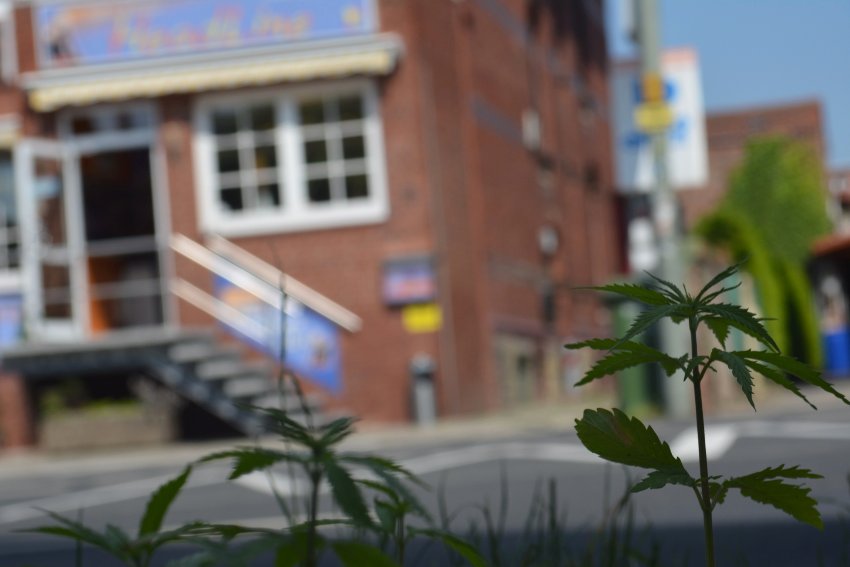
Marijuana Plants Sprout across German City


The German university city of Göttingen is being taken over by marijuana plants. Behind the phenomenon is a group of pro-pot activists who planted seeds around town to stir debate over the plant's illegal status. City authorities are not amused.

The university town of Göttingen is getting greener and greener. But not everyone is pleased: The new plants sprouting up in parks, planter boxes and gardens across the city aren't part of an official city-beautification project. They're part of a pro-marijuana protest.

In early June, a group calling itself "A Few Autonomous Flower Children" spread several kilograms of marijuana seeds throughout the city. Only now are the fruits of their labor beginning to emerge from the soil. "We can't set eyes on this useful and beautiful plant because it's absolutely forbidden in Germany to grow it," the group wrote in a letter claiming responsibility for the action. And they say that's not right.
Planting the seeds was a protest against Germany's "restrictive drug policies," the group said, arguing that it's incomprehensible "why cannabis, unlike alcohol, cannot be legally purchased." They called the absolute ban on the cultivation of marijuana plants -- even ones with low levels of the psychoactive agent tetrahydrocannabinol (THC) -- absurdly strict, and said their actions were a "sign against the demonization of cannabis." The group emphasizes that the strain of cannabis they planted across the city had low THC content.

Thedecriminalization of marijuana in Germany has been a controversial issue for years, as it has been in many countries around the world. Opponents argue that the drug is by no means harmless, which is why it should remain illegal.

Proponents say the legal drugs of alcohol and tobacco are far more dangerous than cannabis -- and they use numbers to back their argument up. Tens of thousands of people in Germany die each year from causes related to alcohol and tobacco consumption. They also argue that the criminalization of marijuana brings users in contact with crime rings, where harder drugs also circulate.


'The Majestic Beauty of this Magnificent Plant'

The Flower Children have found support in the local chapter of the Green Youth (GJ), the youth wing of the Green Party. "The legalization of hemp is a matter of interest for us," a spokesman said. A similar pot-planting protest took place last year in Göttingen, he said, but on a much smaller scale. "Now the plants are spread out across the whole city."

In order to increase the public discussion of the issue, the GJ started a photo competition, now in its second round. About 40 photos of pot plants were submitted, but no winner will be chosen. "The beauty of the photos is enough," a spokesman said.

The GJ published the photos on its website (German only), and called on the readers to "enjoy with deep relaxation the majestic beauty of this magnificent plant!" The pot plants appear in meadows and in front of houses -- even in front of the city's police station.


The police, not surprisingly, are not as taken with the plant's supposed beauty and have launched an investigation for violation of narcotics laws. "This action is a big deal, people really put effort into it," said Göttingen police spokeswoman Jasmin Kaatz. Everywhere seeds could be sown, hemp plants are sprouting, she said.
The police said they are using the photos on the GJ website to identify numerous spots where the plants are appearing. Patrolling officers are vigilant, Kaatz said, and destroy any plants they see while on duty. "Everything that looks like hemp is torn out," she said.

Employees of the parks department are also working to rid the city of the plants. Detlef Johannson, spokesman for the city government, said 70 plants have been removed so far and that more should be expected.

Source -- http://www.spiegel.de/international/germany/pro-marijuana-protest-group-sows-cannabis-seeds-across-goettingen-a-910750.html

Billy Idol Worships Medical Marijuana


Rock icon Billy Idol has used marijuana for medical purposes. "I had to undergo a chemical therapy for a year," he tells The 420 Times. "The only thing that helped me get through it was having access and use of medical cannabis.
"I know a lot of people that medical marijuana has helped," Idol explains. “I knew this older lady that didn’t want to get out of bed and had pretty much given up on life, so her family gave her some medical pot cookies. With inside of a week, she was up, eating, cooking and gardening, so she was happy. It helps people with their quality of life, especially when they’re not feeling good. I’m helping a cause that I believe in, and this is my way of doing it.”
Idol's last album was 2006's Happy Holidays. The British-born rocker (his real name is William Broad) is best known for songs like "White Wedding," Dancing with Myself," "Rebel Yell" and "Cradle of Love."

Source-- http://www.celebstoner.com/news/celebstoner-news/2013/07/12/billy-idol-worships-medical-marijuana/

Military Veteran Loses 2nd Amendments Rights Due To Cannabis Conviction


Imagine serving your country honorably in the Army for two decades and then realizing that you have less rights than other citizens due to a misdemeanor cannabis conviction from high school. And the misdemeanor conviction is so old that the state where the “offense” occurred can’t even find the records of the conviction. Ron Kelly is currently living through such a ridiculous farce.

From Reason:

Ron Kelly, a 20-year Army veteran, recently tried to buy a .22-caliber rifle at the Wal-Mart in Tomball, Texas. He was turned away because he failed the FBI background check. He appealed the rejection, and last month he got a Justice Department letter explaining that he was legally disqualified from owning guns, after handling them in defense of his country for two decades, because of a 42-year-old marijuana conviction. As a high school student in Durham, North Carolina, he had been caught with a small amount of pot and pleaded guilty to misdemeanor possession, receiving a sentence of probation because he was a first-time offender. The probation lasted a year, but according to the Justice Department the ensuing loss of Kelly’s Second Amendment rights lasts a lifetime. “I am ashamed of the way my government has treated me,” Kelly told The Houston Chronicle. ”The government may have the greatest of intentions with the [law], but they messed it up.”

Kelly’s disqualification may in fact be unjustified under current law, which bars gun sales to people convicted of felonies but not misdemeanors (except for misdemeanors involving domestic violence). Unless the feds are treating what North Carolina called a misdemeanor as a felony for some reason, Kelly’s pot conviction should not be covered by that provision. The only other disqualifier that seems possibly relevant is the one for anybody who is “an unlawful user of or addicted to any controlled substance,” but more than a 1971 conviction for possession should be required to demonstrate that Kelly falls into that category.

More on this shameful story from News Radio 600 KOGO:

The outraged veteran, who spent two decades of his life using firearms to defend his country, has since reached out to U.S. Rep. Michael McCaul (R-Texas) and Sen. John Cornyn (R-Texas) for help in resolving the issue. He says he’d be happy with a waiver so he can regain his right to own a firearm.

As an infantryman in the Army, Kelly has fired “perhaps 100,000 rounds of government ammo over his 20 years of service,” Schiller notes.

Meanwhile, officials in North Carolina, where he was born and raised, were unable to even find records of the conviction because it is so old.

This unfortunate story is just yet another example of the failed and futile policy of cannabis prohibition. A simple misdemeanor conviction can follow someone throughout their life, denying them educational and employment opportunities, as well as some constitutional rights. Unfortunately, ridiculous stories such as these will only continue occurring until we end cannabis prohibition once and for all.

Source-- http://nationalcannabiscoalition.com/2013/07/shameful-vet-loses-2nd-amendments-rights-due-to-cannabis-conviction/

Marijuana Stocks News & Marijuana May Help in Weight Loss.

Good News Watch: 
Marijuana Quietly Makes Further Progress (MJNA, CBIS & PHOT).
A quick mid-summer wrap-up of the news about medical marijuana and small cap marijuana stocks like Medical Marijuana Inc (MJNA) and Cannabis Science Inc (CBIS) along with an indirect play called Growlife Inc (PHOT).


Summer time is always a little more laid back for the markets as there has been little recent direct news involving small cap marijuana stocks Medical Marijuana Inc (OTCMKTS: MJNA) and Cannabis Science Inc (OTCMKTS: CBIS) along with a more indirect play on the sector called Growlife Inc (OTCBB: PHOT). With that said, there has still been a steady stream of good news for the marijuana or the medical marijuana industry that is bound to continue helping the small cap players in it:

Marijuana May Help in Weight Loss. Despite giving users the munchies, marijuana may actually make users thinner. According to a recent study published in May's Journal of American Medicine that examined its effect on metabolic processes, there may be a correlation between smaller waist circumference and marijuana use. The following infographic illustrates the results:

-- Medical Marijuana Push in Florida is Well Funded. Florida may become the first southern state to join the 19 states plus the District of Columbia which have approved medical marijuana. According to a Sarasota Herald-Tribune article, there is a well funded and well organized petition campaign to enshrine doctor-approved cannabis in the state's constitution.
-- Washington DC May Decriminalize Marijuana. A bill to decriminalize marijuana in Washington DC was just introduced by councilmember Tommy Wells. If the bill passes, anyone who is caught with less than one ounce of marijuana would be considered a civil offense and the perpetrator would be charged a $100 fine. Apparently, the bill came about after its supporters read an American Civil Liberties Union (ACLU) report which found that the nation’s capital is number one in the country in terms of per capita arrests for marijuana possession.
-- Medical Marijuana Flourishes in Israel. Jewish magazine Tablet has an extensive article about how medical marijuana has become a $40-million-per-year industry while remaining illegal for recreational use. according to the Israeli Health Ministry, its prescribed to some 11,000 Israeli patients, up from 1,800 in 2009. An additional 11 doctors will be certified to prescribe cannabis, bringing the total number to 19 by the end of the year.
-- All’s Quiet With Marijuana Small Cap Stocks. Small cap Marijuana stocks Medical Marijuana Inc and Cannabis Science Inc, which are considered to be the most “legitimate” direct small cap marijuana stock plays, have been fairly quietly lately – no doubt because its summer. Medical Marijuana Inc, which aims to be the premier cannabis and hemp industry innovator, was spiking higher not that long ago – apparently on speculation of an uplisting to the OTCQX (which is the highest market tier on the over-the-counter market). Meanwhile and back in May, Cannabis Science Inc announced that Dr. Dorothy Bray has been appointed as the company’s CEO, by accepting two year management agreement with the Cannabis Science Inc.
-- Growlife Inc Keeps Growing. Growlife Inc, a provider of indoor growing technologies and unique lifestyle brands along with Cannabis.org, an information portal for the medical marijuana industry, recently announced the opening of a new retail location in Plaistow, New Hampshire branded GrowLife Hydro. Growlife Inc has also announced an upward revision to its adjusted revenue guidance for the remainder of the fiscal with $760,709 in revenue being reported for the first quarter and $925,000 expected for the second quarter, $1,810,000 for the third and $1,955,000 for the fourth. The total annual revenue guidance would be $5,450,000 for the 2013 fiscal year. Finally, it should be mentioned that Growlife Inc has also announced the completion of the acquisition of Rocky Mountain Hydroponics, LLC, Evergreen Garden Center(s), LLC and on-line portal 58Hydro.com – making it the largest and most diversified conglomerate related to indoor gardening in the USA.

In other words, marijuana continues to move further into the mainstream or towards wider legalization.

Source-- http://www.smallcapnetwork.com/Good-News-Watch-Marijuana-Quietly-Makes-Further-Progress-MJNA-CBIS-PHOT/s/via/3414/article/view/p/mid/1/id/1407/

Thursday, 11 July 2013

Jamaica Bans Smoking Tobacco, Marijuana Is Another Matter


Banning smoking in public places is not all that uncommon as popular destinations worldwide look to promote a healthy environment for visitors to enjoy. But to some in the Bob Marley-induced culture of Jamaica, tobacco smoke is not the issue.

The new law of the land goes into effect on July 15, when visitors will no longer "have to involuntarily inhale tobacco smoke, with its over 40 carcinogens," said Jamaica's minister of health Fenton Ferguson in a Jamaica Observer article. Jamaicans get that, responding with support for the move to ban cigarette smoking.

On another smoke-related front, Jamaica's Ganja Law Reform Coalition (GLRC) argues that marijuana is a plant with various uses, including environmental and recreational. They propose for marijuana to be taxed and regulated, something not on the agenda of minister Ferguson.
Choosing instead to address other health concerns including excessive alcohol consumption and identifying the contents of fast food, Ferguson insists that "tobacco is the one that a little bit of smoke, a little puff every now and again is dangerous for you." 

Source -- http://www.gadling.com